Beast of Reincarnation Story & Lore Explained — Full Spoilers
Updated August 20, 2026 · Facts cross-checked against the sources listed below
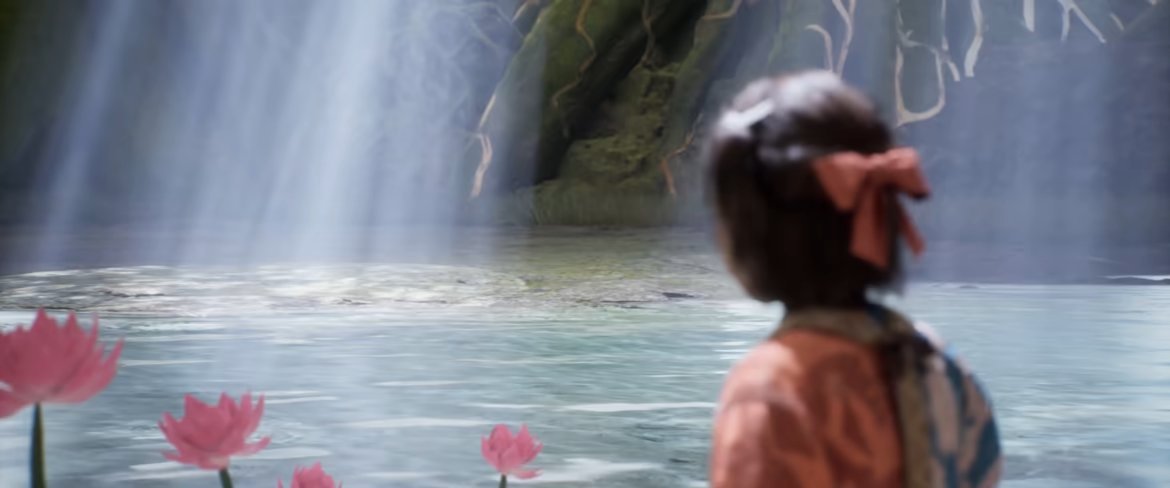
Read This Before You Scroll
Everything below spoils the entire game, including the final boss and the epilogue. If you only wanted to know whether the dog dies: he doesn’t. Now go finish it.
The Setup: Japan, 4026
Roughly two thousand years before the game, human civilisation collapsed at its technological peak. The response was Project Shambhala — a digital world to store human souls until Earth was liveable again.
Getting a soul up there needed a carrier, so humanity seeded the atmosphere with biomechanical particles called Brahman, designed to attune to a soul so the great satellite overhead — what everyone now calls the crescent moon — could lift it into Shambhala.
It didn’t take. In bodies that rejected Brahman, the soul eroded instead of transferring, and the nanobots kept replicating without limit. That is the Blight. Two survival routes opened up: upload your mind into a machine body and become a Golem, or let the corruption take you and become a Malefact. The Golems inherited what was left of society.
Mikoto Is the Beast
This is the game’s central sleight of hand, and it works because the reveal is hiding in a menu. The Mikoto you meet in Chapter 2 — the one who becomes a contact in your comms list, the one you call every time you want to reset your attributes — is the Beast of Reincarnation. Not a servant of it. It.
The Beast is a swarm of nanobots that can split its own power into separate entities, so the young man walking around Earth is a fragment sent to find Violet. Every hundred years the Beast surfaces, spreads Blight to cull humanity, and a comet marks its return — the whole cycle exists to keep feeding human consciousness into Shambhala.
What changed this time: Shambhala itself began to fail. So the Beast stopped merely harvesting and decided to come down, wipe out everyone who isn’t Blightborn, and start humanity’s next era directly.
Why Emma Exists
Sealers aren’t chosen, they’re manufactured — synthetic beings made as the next step of humanity. Emma was built without memories or emotions on purpose, because an empty vessel can receive a soul and hold Blight without breaking.
Which reframes the entire game you just played. Hunting Nushi and absorbing their power felt like a power fantasy; it was assembly. Each strain she took in brought her closer to being a complete vessel — and the Administrator, who kept handing out those hunts, was working with the Beast the whole time. Emma’s reward for finishing the job was to stop being Emma.
There’s a quiet visual tell running alongside it: every Nushi she absorbs blooms a flower in her hair and on Koo’s tail ⚠ single source. The progress bar was on screen the entire time.
Who Is Violet? The Oracle Inside Emma
Violet is the ghost only Emma can see. She was the Oracle of Shambhala, appointed by its residents — who call themselves PLAYERS — to oversee Mikoto, whose power cannot even function without an Oracle.
She is also the reason there is a story at all: Violet is what taught the Beast emotion and love. Mikoto split off part of himself to create the Inugami bloodline, and a thousand years later its descendants tracked down Violet’s reincarnation. Koo comes from that line, and Violet’s soul ends up inside Emma.
One caveat: the two published breakdowns of this sequence contradict each other on whose body the Inugami actually found — one reads it as Koo, the other as Emma ⚠ sources conflict. We’re leaving that knot tied rather than picking a side.
The Cast
| Character | Who they are | What they do |
|---|---|---|
| Emma | Sealer / Purifier — a synthetic being, "The Vessel" | Built without memories or feelings so she could hold a soul and absorb Blight. The only person able to carry multiple Blight strains — which is exactly why she was made. |
| Koo | A white wolf-like Malefact of the Inugami bloodline | Should be mindless like every other Malefact, but kept his awareness. Emma saved him before the story starts. He does not die. |
| Mikoto | The Beast of Reincarnation itself | Appears as a grey-haired young man who bends Blight with his voice. You meet him in Chapter 2 as the NPC who resets your attributes. He is the final boss. |
| Violet | Oracle of Shambhala, visible only to Emma | Chosen by Shambhala’s residents to oversee Mikoto. Reincarnated into Emma as a second soul. She is why Mikoto developed emotions at all. |
| Kagura | Survivor from Ogouchi, Cleanse Walker crew | Rescued by Emma when a Malefact attacked her home. Runs cooking and growing aboard the walker. |
| Brad | Elderly pilot of the Cleanse Walker | Hub character. Reported to be Shambhala’s original overseer, and killed by Kunai after leaving a recording of the truth. |
| Kunai & Kirin | Swordswoman with a Malefact companion | Once shared Brad’s goals, then turned by the Administrator. Fought in Chapters 8 and 12. |
| Shidou & Nue | A rival Purifier and his Malefact | The other Sealer — wants Emma’s Vessel power for himself. Fought three times. |
| The Administrator | Head of the Organization, in the Capital | Hands out the Nushi hunts. Conspiring with the Beast to use Emma as the core of a "second era" for humanity. |
| Golems | Humans who uploaded into machine bodies | They now run what is left of society. The director deliberately refuses to say whether they still count as human. |
| Malefacts | Animals, plants and people whose souls the Blight rotted | The standard enemy. Koo is the exception that proves the rule. |
Naming note: Bauera is the Cleanse Walker itself, not a person — Brad is the one driving it. And one early source says Emma sets out under orders from “the King of the Capital”; the post-release consensus is the Administrator, head of the Organization.
There Is No Secret Ending
People search for one, so let’s settle it. The pages promising a hidden true ending — beat the final boss without being hit by a “Reality Break”, collect ten “Tengu Feathers”, max Koo’s bond in New Game Plus — are fabricated. That story appears only on content-farm sites, and no legitimate source has ever repeated it.
Three independent facts rule it out:
- The trophy list has zero missable trophies, and only two story trophies, both unavoidable. A branching ending would need a trophy split.
- The game has no point of no return — you can save right after the final boss and keep exploring.
- New Game Plus does not change the story. Its rewards are the Kanzashi sword, a final Blade Art and Bloom Art, and the Rejuvenating Barrier skill. No ending is gated behind it.
For what the one ending actually means, see ending explained.
Things the Game Never Answers
Some of this is deliberate. In an interview, director Kota Furushima was asked whether Golems — humans who have lived two thousand years inside machines — still count as human, and refused to answer, saying it’s for the player to decide. The same interview is where he teased players about looking up at the sky.
Genuinely undocumented, as of now:
- Who Doctor S is. The name appears on a collectible document in the Giant Tree Zone and nowhere else — no site has worked out who he was, though the Matsukawa documents around it read like a research programme into souls and machine bodies.
- What the nine Lore Paintings depict. Their locations are mapped; their contents have never been transcribed by anyone. The achievement is called “Behold, the Truth”.
- What the 22 Documents say. Same situation — titles and locations only. Note that documents do not carry into NG+, so collect them before you finish.
We’re not going to invent contents for any of them. If we transcribe them later, they’ll appear here.
Frequently Asked Questions
Who is the Beast of Reincarnation?
Mikoto — the grey-haired young man you meet in Chapter 2 and then call whenever you want to respec. He is not a person but a swarm of biomechanical nanobots, built to run the Shambhala soul-transfer system. Three independent sources confirm it.
What is the Blight?
Its real name is Brahman: nanotech humanity created so that souls could be tuned for upload to Shambhala. In bodies that rejected it, the soul eroded instead — and because the nanobots self-replicate endlessly, that corruption spread through every living thing.
Does Koo die?
No. Koo survives to the end. In Chapter 9 he is consumed by the Blight and becomes the Crimson Malefact boss, but beating that fight saves him rather than killing him — it stops the sickness taking him completely.
Is there a secret or true ending?
No. There is one ending. The "true ending" claims circulating — involving Tengu Feathers, a Reality Break condition, or an NG+ requirement — appear only on content-farm sites and are fabricated. Three checks disprove them: the game has zero missable trophies, no point of no return, and New Game Plus explicitly does not change the story.
Why was Emma created?
To be the next Beast of Reincarnation. Sealers are synthetic beings, and Emma was built without memories or emotions specifically so she could receive a soul and hold Blight safely. Absorbing every Nushi’s power was never really about getting stronger — it was assembling the full set of Blight strains needed for her to take over.
Who is Violet?
The ghost only Emma can see — and she is not a ghost at all. Violet was the Oracle of Shambhala, appointed by its residents (who call themselves PLAYERS) to oversee Mikoto, whose power cannot function without an Oracle. She is why the Beast learned emotion and love, which is what sets the whole story in motion. Her soul was reincarnated into Emma as a second soul, which is why she is visible to Emma alone. Mikoto split off part of himself to create the Inugami bloodline that eventually tracked her reincarnation down; Koo comes from that line.
What is Shambhala?
A digital world built as a holding place for human souls until Earth became liveable again. Its residents call themselves PLAYERS, and it corrupted over time under their collective desires. Mikoto ends it in the finale.
What happens at the end?
Emma refuses to become the next Beast. Mikoto runs her through, and Koo takes the same blow shielding her. Emma absorbs the Blight out of Koo, and her body gives out and becomes a great tree, with her soul held in Koo. Dying, Mikoto uses reincarnation one last time and shuts down Shambhala; the crescent-moon satellite falls and the Blight disperses. Koo carries Emma’s soul to a new body, and when Kagura embraces her she says "I'm back".